Could Leo Carlsson have made $21 million AAV?
On July 3, Philadelphia tendered Carlsson a five-year, $90 million offer sheet: an $18 million AAV that would cost the Flyers four first-round picks. Anaheim is reportedly going to match and keep Carlsson. Was there a way to supercharge the offer so Philly would get Carlsson?
What if you offered 20% of the cap.
Quick offer sheet primer: if a team signs another club's restricted free agent, the original team gets seven days to match. If it doesn't, it receives draft-pick compensation based on the contract's AAV. There are no trade restrictions when this happens.
Usually with offer sheets the rule of thumb is - you keep the player. But if the offer is $21M, can you actually afford to match? Anaheim would have ~$9M to spend on Cutter Gauthier and 2-3 more players.
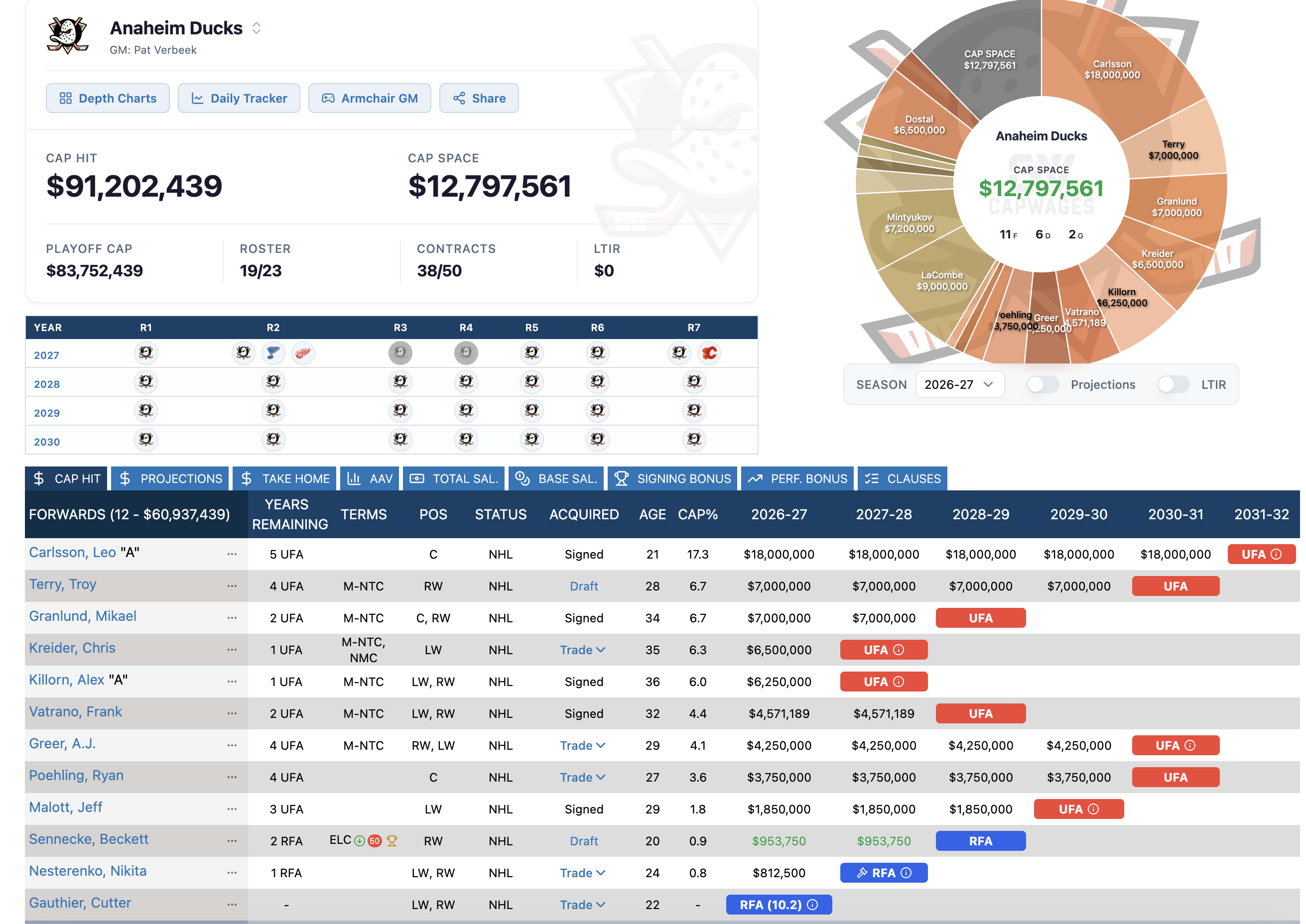
But wait - that wouldn't work for Philly either. Unless...
Say you're Carolina. You have cap space and your draft picks are going to be pretty late. What if you offer sheet Carlsson at $21M, then trade him to Philly? Essentially you're doing a pick swap, but in addition you retain ($3M - $5M per year?) and maybe get another draft pick? Or instead of draft picks four years away, you get two first-rounders and some useful players?
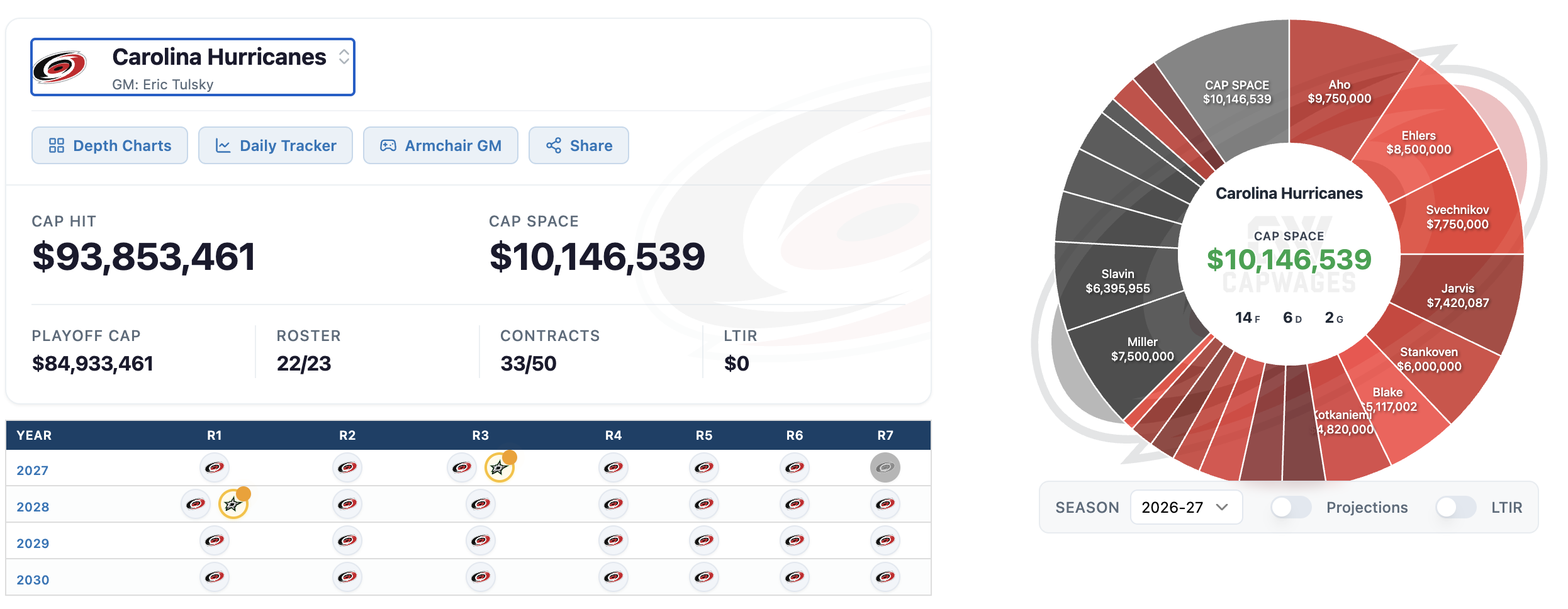
Lots of space to get creative here.
As an aside, this also removes the pick limitation baked into the offer sheet system. Compensation has to come from the signing team's own draft picks, which is a problem when a team wants to make an offer but doesn't control the required picks. Say you're St. Louis and you want to offer sheet Broberg and Holloway - but oh no, Edmonton owns your second-round pick. Engaging a third team might cost you more draft capital, but it removes the logistical headache of re-acquiring specific picks before you can act.
The player gets paid. The acquiring team gets the player. The original team gets compensated. The middle team monetizes cap space and a retention slot.
Win - Win - Lose - Win. Hey, 3/4 ain't bad.
This is a thought experiment, not a confirmed permissible structure under the CBA. Nothing here has been tested with the league, and its anti-circumvention rules give it wide latitude to reject arrangements like this one. If you missed it, part one covers the collaborative offer sheet.